Token Benchmarks
De-Time's compact result modes are meant to lower context cost for machine consumers. This page tracks that claim with a reproducible tokenizer-specific benchmark rather than anecdotal wording.
Method
- tokenizer:
tiktokencl100k_base - scenarios:
- univariate short / medium / long
- multivariate short / medium / long
- modes:
fullsummarymeta
Regenerate the benchmark with:
python benchmarks/token_benchmarks/generate_token_benchmarks.py
Generated artifacts:
docs/assets/generated/evidence/token_benchmarks.jsondocs/assets/generated/evidence/token_benchmarks.csvdocs/assets/generated/evidence/token_benchmarks.svg
What to expect
The benchmark is designed to show two stable directional results:
summaryis materially cheaper thanfullmetais materially cheaper thansummary
The exact counts depend on the payload structure and the chosen tokenizer, so the benchmark should be read as a bounded-cost proxy rather than a universal token law.
Figure
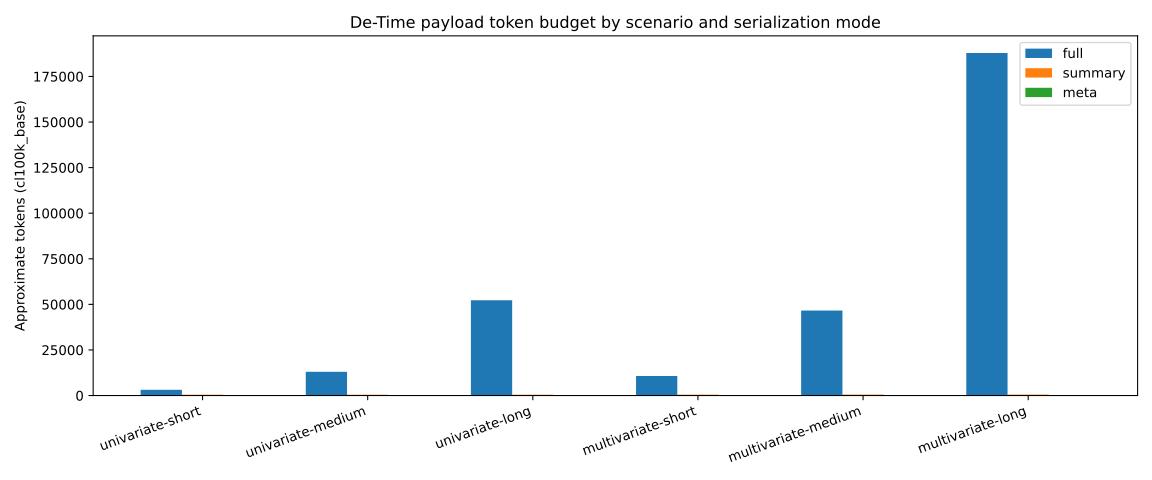
Reading the results
- Use
fullonly when downstream logic truly needs raw arrays. - Use
summarywhen diagnostics and array-shape statistics are enough. - Use
metafor routing, provenance, backend checks, and bounded-context reporting.